
The Surprisingly Simple Planning Level for the SP500
I’ve referenced this in daily updates recently, but today’s session reminds us of how important the 1,770 level is for the S&P 500.
Let’s strip the charts of all indicators and focus on the simple planning levels for short-term and intraday traders:

For a broader perspective, please review my prior updates regarding “S&P 500 Level 1,770” here:
“Updating the Daily Planning Levels for the S&P 500” (Feb. 3)
“S&P 500 Level Planning into 1,770” (Jan 27)
“Respecting the Range While Awaiting a Breakout” (Jan 23)
On the “Double Bottom” reversal up off the critical “Make or Break” Support level of 1,740, price broke the 1,755 midpoint this morning with a gap-up that set in motion today’s intraday trend impulse straight to the 1,770 target.
That’s where we stand currently in the intraday world and we’ll continue to use 1,770 as the overriding strategy level.
Among the other strategies you use to plan your trades, sometimes it’s a good idea to focus on price action itself and the key focal levels traders are watching.
Here’s another viewpoint of the importance of 1,770:

In general, we’ll look for bullish strategies short-term on an “Open Air” breakout above the 1,770 level (give it a couple of points of “wiggle room” for traps – at the moment, price is trading into 1,772) which could open a play toward 1,800 or the 1,810 region.
Otherwise, a downward move here against 1,770’s resistance opens the path again for 1,755 or even 1,740.
Incorporate these levels into your other strategies/indicators and adapt in real-time as price moves toward or away from these levels.
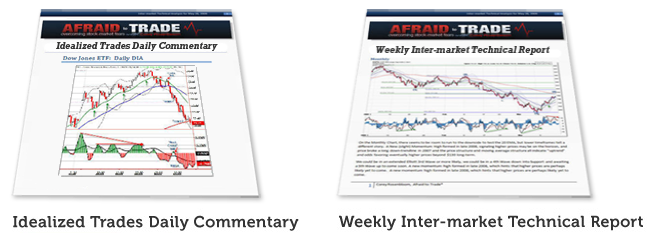
Follow along with members of the Daily Commentary and Idealized Trades summaries for real-time updates and additional trade planning parameters as we watch a “hold and bounce” or “break and retrace” scenario play out in the near future.
Corey Rosenbloom, CMT
Afraid to Trade.com
Follow Corey on Twitter: http://twitter.com/afraidtotrade
Corey’s new book The Complete Trading Course (Wiley Finance) is now available along with the newly released Profiting from the Life Cycle of a Stock Trend presentation (also from Wiley).
Thanks for this article!